
My first trip back to Japan after my new project "Museum of Sake" had launched.
I had made a plan to visit sake breweries I had never visited,
and to learn as much as possible to breathe everything in and bring back to London.
So my Museum of Sake Tour, abbreviated to "MuseSakeTour" had finally started.
新たな事業「Museum of Sake」が始まって初めての帰国。
自分の勉強やご挨拶も兼ねて、初めてお伺いさせて頂く全国の蔵を
時間や機会が許す限りで勉強しながらまわる予定をたてました。
短い帰国のため、行きたい蔵元さん全てまわれないのが残念ですが、
その中で出来るだけのものを吸い込み、ロンドンの地に持って帰りたい。
そんなMuseum of Sake Tour、略して「MuseSakeTour」が始まりました。

The first destination of MuseSakeTour is my roots of Sake journey; Akita prefecture.
to "Yuki no Bosha" of Saiya Shuzoten in Yurihonjo city,
situates half hour train ride from Akita city.
This brewery was established 1902, considered as a young brewery in the sake world.
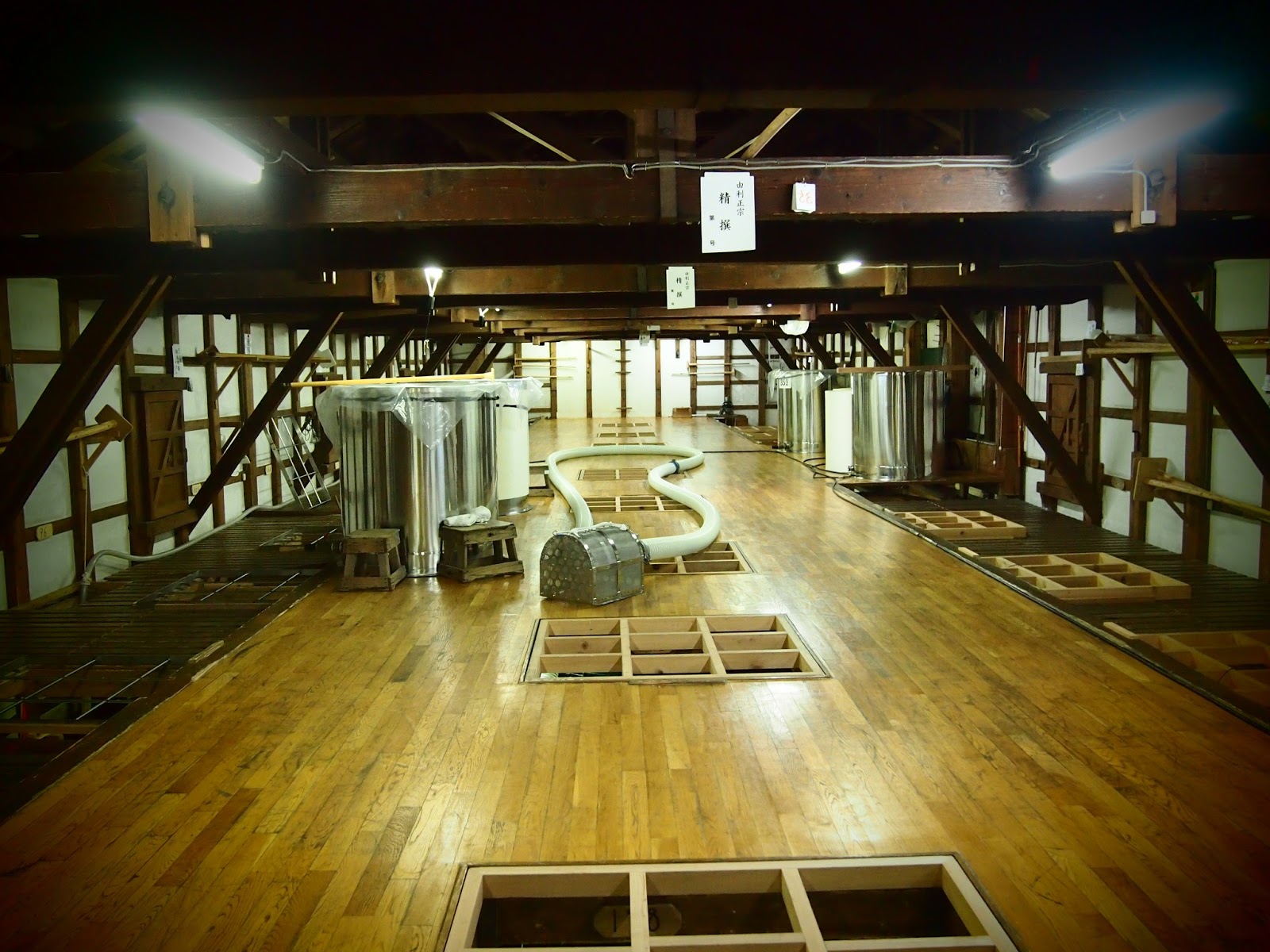
One of the most unique characteristics of this brewery is that the building was built
for the location where best quality water springs out from Mt. Shinzan,
which happened to have the high slope, and there is 6 metre gap
between the lowest and the highest room.
between the lowest and the highest room.
Because of this architecture, their brewery was named "Nobori-Gura"(=uphill brewery)
taken after "Nobori-gama," which are pottery kilns built in a rising form.
I have been reading a book named "Bishu no Sekkei (Designing the Beautiful Sake),
The great work of Master sake brewery (=Toji) Toichi Takahashi"(published by Magazine House)
written by Chieko Fujita and it has always been dreaming to visit this place.
For more information on Nobori-gura, please check their site's description.
まず最初の目的地、それは私の日本酒道のルーツとなる秋田。
その秋田のお酒の中でもずっと訪ねたかった蔵元さん、
「雪の茅舎」「由利正宗」で有名な由利本荘の齋彌酒造店に伺いました。
明治35年、日本酒の世界ではまだ若手とされるこの蔵を象徴する特徴のひとつに、
私の愛読書で、藤田千恵子さん書かれた
「美酒の設計 極上の純米酒を醸す杜氏・高橋藤一の仕事」(マガジンハウス)
にも冒頭に紹介されている「のぼり蔵」があります。
新山という山を水脈として湧き出る水を優先させて
蔵の建設地を選んだ土地が傾斜地であったため、
蔵内の高低差が6メートルあるという非常に珍しい構造となったことから、
焼き物の世界「のぼり窯」をもじってつけられたそうです。
のぼり蔵のより詳しい構造はこちらからご覧になれます。

Today's navigator was the 2nd generation president Kotaro Saito,
and Toji, master sake brewer Toichi Takahashi,
who is a main character of the book introduced above.
From the book, primally I had an impression of Takahashi Toji to be typical stubborn old guy,
Yet as soon as I met him I felt how genuine he speaks,
and his gentle shines of eyes made me feel his inner fire,
calm strength and charismatic presence.
Though such a professional Toji like him with 50 year experience,
Mr. Takahashi still tells me "It felt like I had been in lost for 50 years
because I could not make the sake I desired. but finally, my production has been blooming lately."
His words explain me the depth of relationship he built with Yuki no Bosha,
and the secrets of their sake quality.
I would like to reveal some of these secrets today...
who is a main character of the book introduced above.
From the book, primally I had an impression of Takahashi Toji to be typical stubborn old guy,
Yet as soon as I met him I felt how genuine he speaks,
and his gentle shines of eyes made me feel his inner fire,
calm strength and charismatic presence.
Though such a professional Toji like him with 50 year experience,
Mr. Takahashi still tells me "It felt like I had been in lost for 50 years
because I could not make the sake I desired. but finally, my production has been blooming lately."
His words explain me the depth of relationship he built with Yuki no Bosha,
and the secrets of their sake quality.
I would like to reveal some of these secrets today...
今回の案内人は二代目社長の齋藤浩太郎社長、そして
上記の藤田さんの書籍にも登場した高橋藤一杜氏。
書籍の分調からたいそうな頑固親父なのかと想像していたのですが、
本人はずっと柔和で、穏やかに話し、優しい瞳を持った方。
しかし本物を見極めようとする信念や芯の太さが静かに燃え、
相手を引きつけるカリスマ性のある方だという印象を受けました。
杜氏として酒造りを初めて50年にもなる名杜氏でありながらも、
「この50年、自分の想いの酒ができなくて悩んで悩んできたんですが、
ようやく造りが実を付けてきました」と語る杜氏の言葉に、
彼とこの蔵の歴史の深さと雪の茅舎の素晴らしい酒質の秘密が
隠されているように感じました。
今回はその秘密に迫ってみました。
今回はその秘密に迫ってみました。

"Not washing rice, but 'shining' rice"
There are numerous points of explain about this brewery's philosophies;
At the very beginning of sake making, there is a process called "Senmai = rice washing",
however the Toji Mr. Takahashi emphasises that the name of this process altered
by the introduction of the machinery.
Instead old brewers used to call this process "Kometogi = shining rice".
At Saiya Shuzoten, the rice has been washed to shine for four times
using about three times more water than what average breweries use.
No matter the polishing ratio of rice, by they complete this process
the water shines rice a beautiful parl to be perfect for sake making.
Rice shining is the most basic and most important, Mr. Takahashi told me many times.
<洗米ではなく「米磨ぎ」>
There are numerous points of explain about this brewery's philosophies;
At the very beginning of sake making, there is a process called "Senmai = rice washing",
however the Toji Mr. Takahashi emphasises that the name of this process altered
by the introduction of the machinery.
Instead old brewers used to call this process "Kometogi = shining rice".
At Saiya Shuzoten, the rice has been washed to shine for four times
using about three times more water than what average breweries use.
No matter the polishing ratio of rice, by they complete this process
the water shines rice a beautiful parl to be perfect for sake making.
Rice shining is the most basic and most important, Mr. Takahashi told me many times.
<洗米ではなく「米磨ぎ」>
高橋杜氏の様々なこだわりのある雪の茅舎の酒造り。
その一つが米を洗う作業にあります。
日本酒造りの最初の工程にて、お米を精米した後、その米についた糠を
その一つが米を洗う作業にあります。
日本酒造りの最初の工程にて、お米を精米した後、その米についた糠を
取り払う作業としてお米を洗う「洗米」という工程があります。
現代の機械化された酒造りの中で「洗米(せんまい)」と
呼ばれるようになったものの、かつてはこの作業を「米磨ぎ(こめとぎ)」と呼んで、
手を使ってお米磨き=米磨ぎと向き合ってきた歴史がありました。
齋彌酒造店では、他の蔵の約3倍程の量の沢山のお水を使って、
短い時間で4回もの回数をかけてお米をとことん磨きます。
精白に関係なく、この作業を徹底することで
お米の輝きが変わってくるのだと言います。
高橋杜氏曰く、米磨ぎが一番基本中の基本。

"No Tokomomi. Do not mix the rice in Koji room"
After steaming the rice, the rice is cooled down and then brought
to the special warm room called Koji-room to propagate Koji mold onto the rice.
The rice is constantly 'mixed and massaged' to spread the mold evenly and
we call this process "Toko-momi = massaging on the bed".
However, Saiya Shuzoten never touch the rice once brought rice in Koji room.
They mainly use Yamadanishiki rice because of its transparency given to sake.
<床もみはしない>
After steaming the rice, the rice is cooled down and then brought
to the special warm room called Koji-room to propagate Koji mold onto the rice.
The rice is constantly 'mixed and massaged' to spread the mold evenly and
we call this process "Toko-momi = massaging on the bed".
However, Saiya Shuzoten never touch the rice once brought rice in Koji room.
They mainly use Yamadanishiki rice because of its transparency given to sake.
<床もみはしない>
蒸し米を麹菌を繁殖させる作業を床もみと言いますが、
こちらの蔵では、放冷機にて種切りをしてから、床もみの作業をいっさい行いません。
上の写真は山田錦の母親に当たる品種の山田穂。
山田錦は弾力があり、他のお米にない透明感が出るため、
秋田県の酒造好適米である秋田酒こまちが造りの半分、
残りは大半山田錦を使用しています。
麹の使用率も問題ではなく、その内容であると
麹の使用率も問題ではなく、その内容であると
高橋杜氏は力強く語ってくださいました。


The greatest invention; Koji production machine by Hakuyo was there.
優秀選手のハクヨーの吟醸用製麹装置もありました。
優秀選手のハクヨーの吟醸用製麹装置もありました。

"Stick to Yamahai style"
About half of sake at Saiya Shuzoten is made in Yamahai method
when they make the yeast starter (Shubo).
Yamahai or Kimoto method is more energy and labor consumed method
because of its process; in the most common style (called Sokujo-moto) today,
the brewer adds lactic acid when making the yeast starters
to get rid of unwanted bacteria inside of the tank. Whereas in Yamahai-moto style,
the starter is left out for a month for the wild lactic acid in the air to come in.
Because of its length of time developing the starter (It only takes two weeks for Sokujo-moto),
It creates the depth and more structured body, as well as the pleasant acidity in flavours.
<山廃仕込みにこだわる>
齋彌酒造店さんで造られるお酒の半分は山廃(やまはい)仕込み。
お酒造りの天敵である、雑菌や野生酵母から酒母を守る役割を果たす大切な乳酸菌。
一般的な速醸酛(そくじょうもと)では、人工的に乳酸菌を加えるのですが
昔ながらの生酛(きもと)や山廃酛は、空気中から乳酸菌を取り込んで
乳酸を生成させ、一ヶ月もの長い日数をかけて(速醸酛では約2週間)、
お酒のもととなる酒母を育てていきます。
時間と自然の力をかけた山廃造りによって、
独特の酸や味の奥行きが生み出されるのです。
お酒造りの天敵である、雑菌や野生酵母から酒母を守る役割を果たす大切な乳酸菌。
一般的な速醸酛(そくじょうもと)では、人工的に乳酸菌を加えるのですが
昔ながらの生酛(きもと)や山廃酛は、空気中から乳酸菌を取り込んで
乳酸を生成させ、一ヶ月もの長い日数をかけて(速醸酛では約2週間)、
お酒のもととなる酒母を育てていきます。
時間と自然の力をかけた山廃造りによって、
独特の酸や味の奥行きが生み出されるのです。
"No Kaiire at all. Do not mix the fermentation mash"
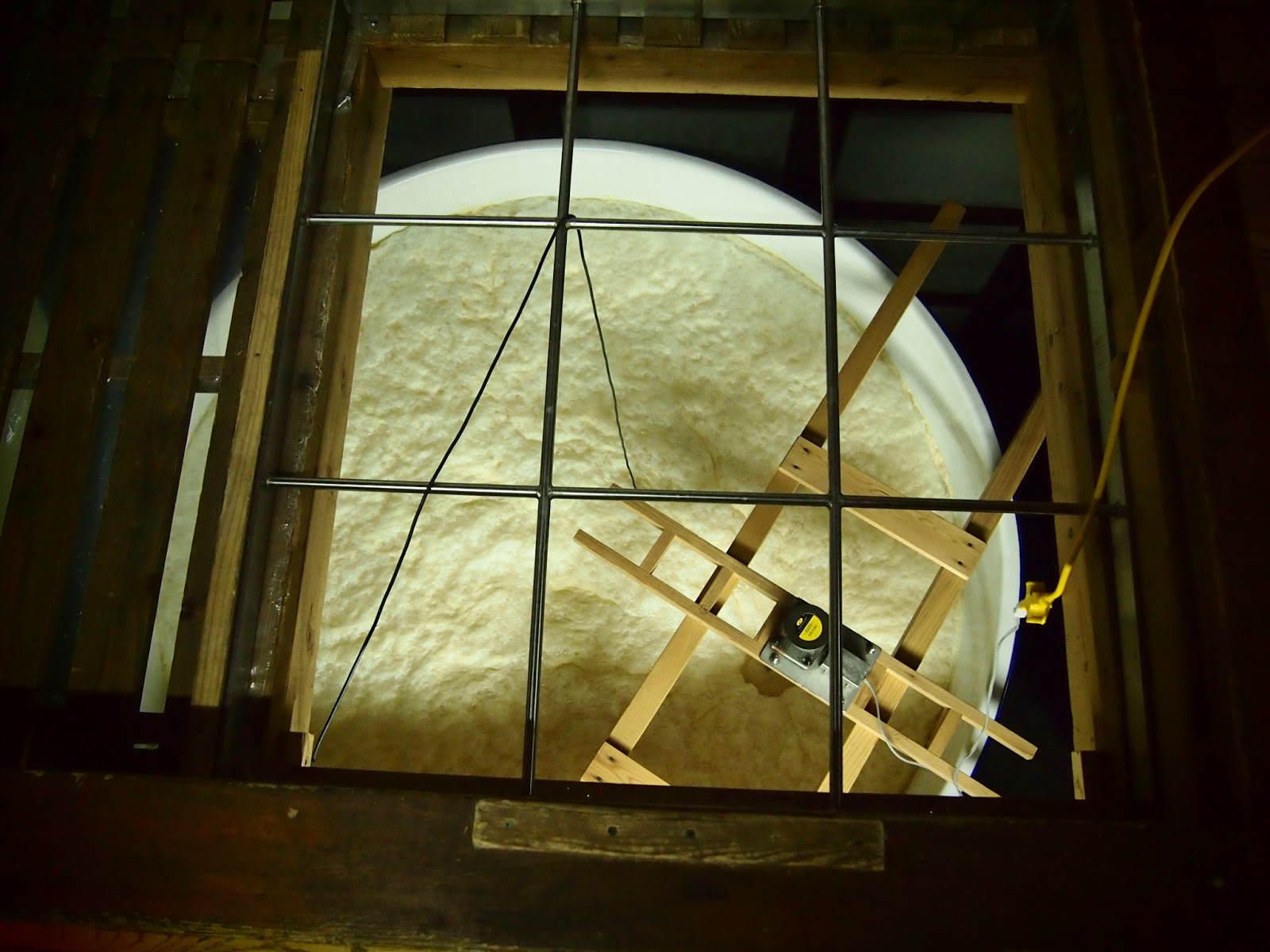
"We do not have an ideal style/flavour of sake, instead we express the fullness of rice, water, and environment we use for sake making. That is Yuki no Bosha"
Mr. Takahashi explain me carefully.
Therefore, the typical sake maker's Kai-ire, mixing the fermentation mash
with long wooden stick would never happen at Saiya Shuzoten,
because the natural convection from the fermentation will mix the mash perfectly without human hands.
<櫂入れはしない>
"We do not have an ideal style/flavour of sake, instead we express the fullness of rice, water, and environment we use for sake making. That is Yuki no Bosha"
Mr. Takahashi explain me carefully.
Therefore, the typical sake maker's Kai-ire, mixing the fermentation mash
with long wooden stick would never happen at Saiya Shuzoten,
because the natural convection from the fermentation will mix the mash perfectly without human hands.
<櫂入れはしない>
「目指す酒はありません。使うお米やお水、環境そのものを表現したら
雪の茅舎になるんです」と高橋杜氏。
なので普段の酒蔵の風景で一般的な、長い棒、櫂(かい)で醪を混ぜる作業、
櫂入れ(かいいれ)は、行いません。
発行する醪の中で生まれる自然な対流に、わざわざ人間の手を加える必要はない。
あくまでも、微生物のエネルギーを最大限に利用するのが
齋彌酒造店のポリシーです。
雪の茅舎になるんです」と高橋杜氏。
なので普段の酒蔵の風景で一般的な、長い棒、櫂(かい)で醪を混ぜる作業、
櫂入れ(かいいれ)は、行いません。
発行する醪の中で生まれる自然な対流に、わざわざ人間の手を加える必要はない。
あくまでも、微生物のエネルギーを最大限に利用するのが
齋彌酒造店のポリシーです。
"Care for Home-grown yeast & Bubbling yeast"
At Saiya Shuzoten, They collect and categorize more than 10 types of yeast every single year.
though its base is AK-1 yeast (Akita Yeast), by selecting the better quality of yeast
It grows into the yeast which is unique and indiviual to Saiya Shuzoten.
Questioning on the market tendency using more non-bubbling yeast types for easier handling,
They has been intentionally choosing bubbling yeast.
Always question.
<自家培養+泡あり酵母にこだわる>
齋彌酒造店さんでは、毎年、優良な酵母を独自に採取・分類した
自家製の酵母を十何種類常時ストックしているとのこと。
ベースはAK-1酵母(いわゆる秋田酵母)ですが、
年々優良酵母を選別していく過程で
At Saiya Shuzoten, They collect and categorize more than 10 types of yeast every single year.
though its base is AK-1 yeast (Akita Yeast), by selecting the better quality of yeast
It grows into the yeast which is unique and indiviual to Saiya Shuzoten.
Questioning on the market tendency using more non-bubbling yeast types for easier handling,
They has been intentionally choosing bubbling yeast.
Always question.
<自家培養+泡あり酵母にこだわる>
齋彌酒造店さんでは、毎年、優良な酵母を独自に採取・分類した
自家製の酵母を十何種類常時ストックしているとのこと。
ベースはAK-1酵母(いわゆる秋田酵母)ですが、
年々優良酵母を選別していく過程で
蔵独自の個性をもった酵母に育っていっているそうです。
扱いやすさに優先されて泡無し酵母に偏った業界に疑問を感じて、
数年前からほとんど泡あり酵母を使用しているのもこだわりの一つ。
扱いやすさに優先されて泡無し酵母に偏った業界に疑問を感じて、
数年前からほとんど泡あり酵母を使用しているのもこだわりの一つ。

"Physically, Brew the Sake you would like to taste"
'My generation was the generation who has used to drink Sanzou-shu or "triple sake",
which has more distilled alcohol, sugar and other additives added
to make it convenient and enable to make sake during the shortage of rice in the war time.
Yet the young generation today is not used to the sake like that. ' says Mr. Takahashi.
He is committed to understand the consumer, and to make sake by the ones
who are the closest generation to the consumer today.
That is why all the brewers I met during my visit were
young and enthusiastic in their 20s and 30s.
Saiya Shuzoten never show their numerical production data for young brewers.
"Every young brewer learn how to make perfect steamed rice and koji rice
by using their five senses; texture, flavour, aromas and other aspects of rice.
Once they became dependent on the numbers of moisture level or Koji rate,
They will never learn sake making physically."
I felt their strong commitment to pass the baton of sake to the next generations
in their best way.
'My generation was the generation who has used to drink Sanzou-shu or "triple sake",
which has more distilled alcohol, sugar and other additives added
to make it convenient and enable to make sake during the shortage of rice in the war time.
Yet the young generation today is not used to the sake like that. ' says Mr. Takahashi.
He is committed to understand the consumer, and to make sake by the ones
who are the closest generation to the consumer today.
That is why all the brewers I met during my visit were
young and enthusiastic in their 20s and 30s.
Saiya Shuzoten never show their numerical production data for young brewers.
"Every young brewer learn how to make perfect steamed rice and koji rice
by using their five senses; texture, flavour, aromas and other aspects of rice.
Once they became dependent on the numbers of moisture level or Koji rate,
They will never learn sake making physically."
I felt their strong commitment to pass the baton of sake to the next generations
in their best way.
「あなた方が飲めるお酒造りを」
「私たちの世代ははお酒三増酒を飲んできた世代であるが、
今の人はそんなお酒を飲んできてない、飲めない世代です」と語る高橋杜氏。
世の中を読み、そして若い感性で、その世代に受け入れられる酒を
自らの体を使って酒造りをしてもらいたい。
そんな想いからか、お会いした蔵人さん達は皆20代・30代の
やる気溢れた若手蔵人さんばかり。
そんな想いからか、お会いした蔵人さん達は皆20代・30代の
やる気溢れた若手蔵人さんばかり。
また、彼らには、ほとんどの工程において数値によるデータは公表しないのも
この蔵の徹底したポリシー。
この蔵の徹底したポリシー。
「米を蒸す工程や製麹の工程も、お米の固さや味、香り等
五感を使って覚えてもらいます。
五感を使って覚えてもらいます。
水分値や麹率等の数値を伝えてしまうと、そればかりに頼って
本来の酒造りを学ぶ事ができないから」だそうです。
日本酒というバトンを、最高の形で次世代に渡していきたい。
そんな齋彌酒造店さんの蔵の姿勢を感じました。
本来の酒造りを学ぶ事ができないから」だそうです。
日本酒というバトンを、最高の形で次世代に渡していきたい。
そんな齋彌酒造店さんの蔵の姿勢を感じました。

Other than above, they have so much more policy for
non-carbon filteration (Muroka), non-dilution (Genshu),
and non-use of chemical sanitizer.
Everywhere in the brewery was crystal clean by their hand wiping and cleaning.
It all comes from their policy; "In Sake making, the work of human being is
to sustain the best environment for the microorganism to live."
Their brand "Yuki no Bosha" means "Snow Cabin" in English.
When a writer visited its brewery in the winter, he named them by overseeing the sceneries
with thatched roof houses covered with white snow.
I thought it is exactly like their sake; clean, pure and transparent.
その他も、炭素濾過はしない、割水(加水)しない、
蔵の中はホルマリン殺菌等の薬品等は一切使用せず、
全て蔵人さん達の手拭き掃除で常にピカピカにというこだわりよう。
「人間は微生物達に最適な環境を整える事が仕事」という
精神にのっとった酒造りを徹底されていました。
「雪の茅舎」という銘柄名は、ある作家さんが蔵を訪問した際、
雪に埋もれた茅葺き屋根の農家が点在する冬景色を見て
つけられたそうです。
透明感に溢れ、静かに語りかけてくれる雪の茅舎さんの味わいは、
まさにその景色そのものだと感じました。
Thank you very much master brewer Toichi Takahashi and president Kotaro Saito.
non-carbon filteration (Muroka), non-dilution (Genshu),
and non-use of chemical sanitizer.
Everywhere in the brewery was crystal clean by their hand wiping and cleaning.
It all comes from their policy; "In Sake making, the work of human being is
to sustain the best environment for the microorganism to live."
Their brand "Yuki no Bosha" means "Snow Cabin" in English.
When a writer visited its brewery in the winter, he named them by overseeing the sceneries
with thatched roof houses covered with white snow.
I thought it is exactly like their sake; clean, pure and transparent.
その他も、炭素濾過はしない、割水(加水)しない、
蔵の中はホルマリン殺菌等の薬品等は一切使用せず、
全て蔵人さん達の手拭き掃除で常にピカピカにというこだわりよう。
「人間は微生物達に最適な環境を整える事が仕事」という
精神にのっとった酒造りを徹底されていました。
「雪の茅舎」という銘柄名は、ある作家さんが蔵を訪問した際、
雪に埋もれた茅葺き屋根の農家が点在する冬景色を見て
つけられたそうです。
透明感に溢れ、静かに語りかけてくれる雪の茅舎さんの味わいは、
まさにその景色そのものだと感じました。
Thank you very much master brewer Toichi Takahashi and president Kotaro Saito.
I am graceful that I had met a brewery like them who I would silently and continuously follow.
高橋藤一杜氏、斎藤浩太郎社長、本当にありがとうございました。
静かに、末永く応援していきたい。
そんな蔵に出会えた気がしています。
そんな蔵に出会えた気がしています。


